
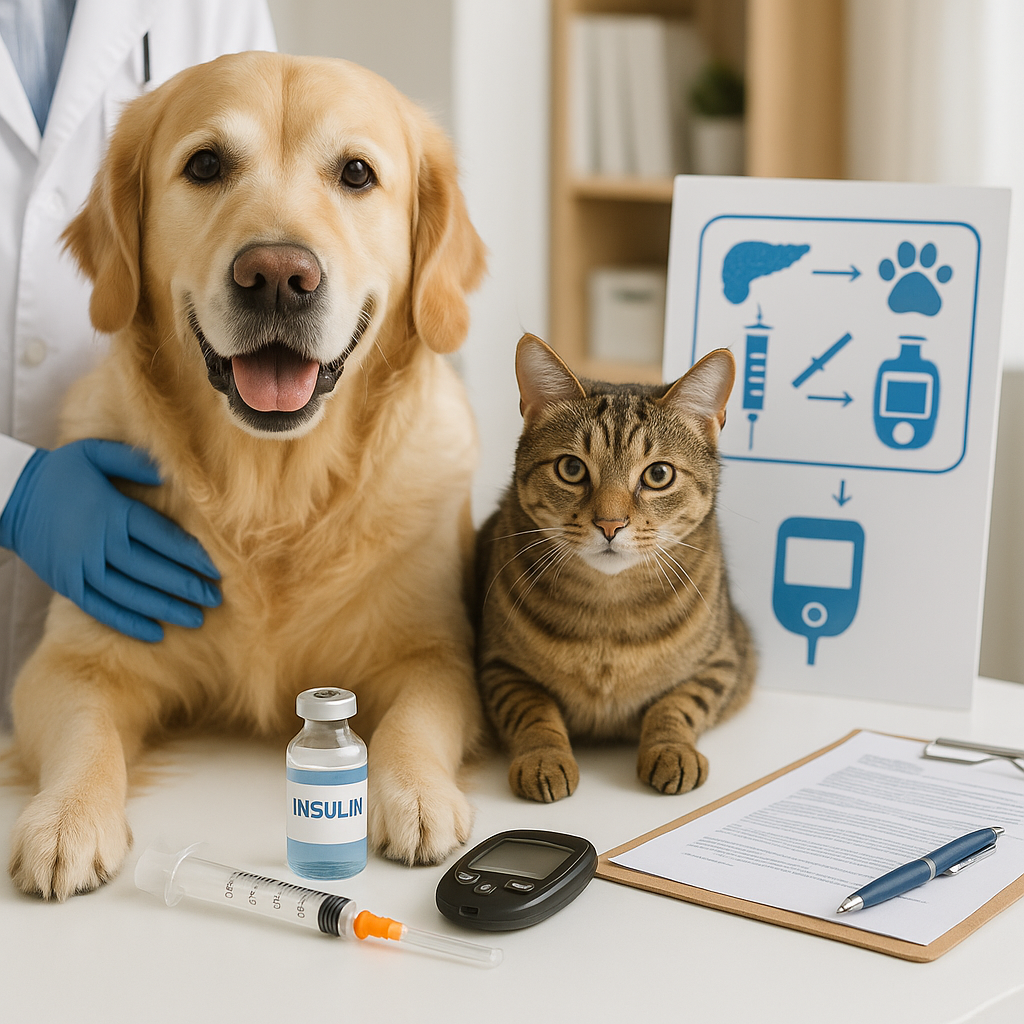
Diabetes mellitus is a fairly common condition in both dogs and cats, and it happens when the body can’t produce enough insulin or can’t use insulin effectively. Insulin is essential for moving glucose (sugar) from the bloodstream into the body’s cells for energy. When this system breaks down, blood sugar rises and leads to diabetes.
How Pets Develop Diabetes
Pets can develop diabetes for several reasons:
- Obesity: Extra body fat decreases the body’s sensitivity to insulin, making overweight pets significantly more at risk.
- Genetics: Certain breeds may be predisposed, though this is less common.
- Pancreatic disease: Inflammation or damage to the pancreas can reduce insulin production.
- Hormonal conditions: Diseases like Cushing’s or chronic hormone changes can interfere with insulin.
- Age: Middle-aged to older pets are diagnosed most often.
Prevention
The most powerful tool for preventing diabetes is maintaining a healthy body weight. Strategies include:
- Feeding a balanced, portion-controlled diet
- Daily exercise appropriate for your pet
- Routine wellness exams and bloodwork to catch early changes
- Spaying female pets can reduce certain hormone-related risks
A healthy lifestyle today greatly reduces the chance of diabetes later.
Treatment
Diabetes is very manageable with proper care:
- Insulin injections (typically twice daily)
- Consistent diet and feeding schedule to keep blood sugar steady
- Weight management—ideal body condition improves insulin response
- Regular monitoring, including bloodwork and glucose checks
With early diagnosis and committed home care, most diabetic pets live full, happy lives.